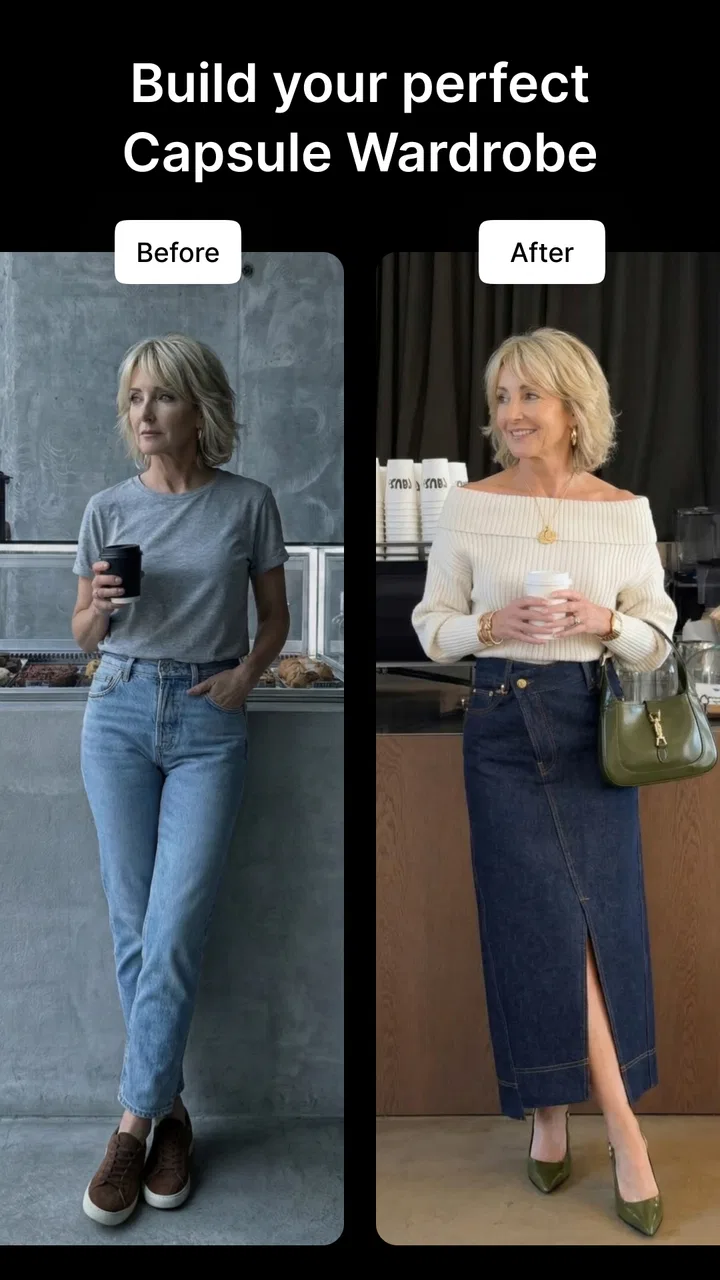
Outfit AI Stylist – Dressly
- 4.2
- Rating
- 100.00K
- Installs
- Free
- Price

 Analysis by App-foxy
I tried Outfit AI Stylist – Dressly as the kind of app you open when your wardrobe feels full but nothing seems right. It is aimed at everyday clothing decisions rather than professional fashion work: choosing an outfit for the office, finding a better combination for a dinner, or getting unstuck before leaving home. The app comes from Dressly World and sits in the lifestyle category, with a free download and optional in-app purchases ranging from $9.99 to $79.99 per item.
My first impression was that its value depends less on discovering a single perfect look and more on reducing the small amount of mental effort that goes into getting dressed. That distinction matters. A human stylist can ask about your routine, comfort, budget, climate, and personal taste in a conversation. An AI wardrobe planner has to work from the information you give it and the way you react to its suggestions. When that handoff is clear, the experience is useful. When it is vague, the results can feel like generic fashion inspiration.
From a wardrobe problem to a usable outfit
I find the quickest way to judge a styling suggestion is to check whether it solves the occasion I had in mind, not whether it looks striking on its own. I’d also notice which part of the idea feels promising—color, layering, or silhouette—so I can keep that useful element even if the full outfit needs changing. From there, the next question is how the app holds up when I use it during a busy stretch of everyday decisions.
You May Also Like

 Pandora - Music & Podcasts
Pandora’s Music Is Easy to Start, but Harder to Recover
Pandora’s strength is its low-effort path from a seed to a station. Its weak spot is how much confidence it asks you to place in connection, setup, and quiet recovery.

 AccuWeather: Weather Radar
AccuWeather Review: A Quick, Clear Forecast for Everyday Decisions
For everyday plans, the best forecast is the one you can understand quickly. AccuWeather makes rain timing, radar, and local conditions easy to act on, with a few trade-offs.

 Hill Climb Racing
Why Hill Climb Racing Still Turns Crashes Into One More Run
A tiny car, a bumpy hill and one more upgrade: Hill Climb Racing keeps resurfacing because its simple chaos makes every near-miss feel personal.

 AliExpress - Shopping App
AliExpress Makes Global Shopping Feel Personal, but Shoppers Bear the Risk
AliExpress turns a global marketplace into a pocket-sized discovery engine. Its reach is useful, its shopping loop compelling, and its trade-offs easy to miss.

 Lords Mobile: Kingdom Wars
Lords Mobile Is a Kingdom-Building Routine, Not a Quick Match
A case-by-case verdict on the building, battles, device demands, and social commitments that make Lords Mobile rewarding for some players and exhausting for others.

 PDF Scanner app - TapScanner
TapScanner Makes Paperwork Easier to Capture, Check, and Share
TapScanner makes scanning with a phone feel less like a rescue operation and more like a dependable step in getting work done. Its capture tools are useful, though not flawless.
More From Our News Desk
View All News


The starting condition matters more than the app itself
I would not open this app expecting it to replace a wardrobe, identify every garment perfectly, or understand an occasion without any guidance. I found it more helpful when I started with a defined problem: “I need something casual but presentable,” “I want to use this jacket more often,” or “I have too many similar pieces and need combinations.” That gives the styling process a practical target instead of turning it into endless browsing.
This is also where the app separates itself from a normal fashion feed. A feed is good at showing attractive looks, but it often leaves me with the same question: what can I actually wear today? A personal stylist tool is more useful when the starting point is my own clothing and schedule. The trade-off is that the quality of the outcome depends on how carefully I describe or supply that starting point.
The app is free to begin with, which makes it easy to test whether its approach suits you before considering any paid item. It is rated at an average of 4.0 from around 4.6 thousand ratings, and its listing shows more than 100 thousand installs. Those figures suggest a real user base, but they do not guarantee that every wardrobe type will receive equally convincing suggestions. Clothing preferences are personal, and an outfit that feels polished to one person may feel impractical to another.
Building the input without overcomplicating it
The most sensible way to use an AI stylist is to treat the first pass as a setup conversation rather than a final verdict. I would begin with a small, representative selection of clothes instead of trying to document everything I own at once. A favorite pair of trousers, two tops, a jacket, and the shoes I actually wear can reveal more about my daily style than a large pile of rarely used items.
That approach offers a useful, non-obvious advantage: it exposes gaps in combinations rather than gaps in shopping. If the same trousers work with several tops but none of the outfits feel complete, the problem may be footwear, layering, or color balance. The app can help me notice that pattern, but I still need to judge whether the suggestion fits my comfort and routine. I would use its recommendations as a way to audit my wardrobe, not as an instruction to buy something immediately.
There is also a practical handoff between the app and the user at this stage. The app can organize a styling request, but I remain responsible for making the input accurate. If a garment is seasonal, uncomfortable, too formal, or difficult to care for, I should mentally mark that limitation while reviewing the result. Otherwise, the system may produce a visually coherent outfit that fails in real life.
Following the step-by-step styling flow
Once the starting point is clear, I would move through the app in a focused sequence: define the occasion, consider the desired mood, review the proposed outfit, and then compare it with what is physically available. That order prevents a common mistake with recommendation apps—judging an image before deciding whether it solves the original problem.
For an ordinary weekday, I might begin with a look that needs to handle commuting, a desk, and an informal evening. The useful question is not whether each piece looks fashionable in isolation. It is whether the combination survives the whole day. A recommendation that works only while standing indoors is less valuable than one that accommodates movement, weather changes, and the need to remove a layer.
I found that the app’s strongest role is as a second opinion. It can push me toward combinations I would not assemble automatically, especially when I keep repeating the same safe outfit. That does not mean every suggestion deserves to be worn. Some ideas need editing: changing the shoes, removing an accessory, adding a warmer layer, or replacing a color that feels too loud.
A useful habit is to save or remember the logic behind a good combination rather than only the exact outfit. For example, I might notice that a simple base becomes more interesting when the outer layer adds structure, or that a neutral bottom allows a patterned top to stand out. This turns the app from a one-time picker into a source of repeatable styling rules. It is one of the better ways to get lasting value without opening it every morning.
Where the handoffs create friction
The main handoff is between an AI suggestion and a human decision. The app can propose an arrangement, but it cannot fully experience fabric weight, tightness, temperature, personal associations, or the confidence I feel when wearing something. I would therefore judge every result through three quick checks: can I move comfortably, does it suit the setting, and would I genuinely choose it again?
A second handoff occurs between a digital wardrobe and the physical closet. Even a good recommendation can fail if a garment is in the laundry, needs ironing, has a different fit than expected, or does not match the displayed item as closely as I imagined. This is why I prefer testing suggestions with clothes already in front of me. The app helps with planning; the final fitting still happens away from the screen.
The third handoff is financial. Because the app includes optional purchases, I would separate styling advice from shopping decisions. A recommendation may reveal that I need a particular type of layer or shoe, but that does not mean I should purchase it immediately. I would first try substitutes from my current wardrobe and only consider spending money if the missing piece solves several recurring outfit problems.
A realistic everyday workflow
Imagine I am leaving for work on a cool morning and meeting friends afterward. I start with a pair of trousers I know is comfortable, then use the app to explore tops and an outer layer that make the outfit less predictable without becoming formal. I compare the suggestion with the weather and my walking plans, reject anything that looks too delicate or restrictive, and test the remaining combination in a mirror.
The result is not necessarily the most dramatic outfit. In my view, success is more modest and more useful: I leave with a combination that feels intentional, uses clothes I already own, and avoids the ten-minute cycle of changing repeatedly. If the first recommendation is unsuitable, I can still learn from the direction it took. Perhaps the color contrast was right but the silhouette was wrong, or the layering worked but the shoes made the look impractical.
This workflow also shows why the app may appeal to people who are not deeply interested in fashion. It reduces the decision into manageable stages. Instead of asking, “What should I wear?” I can ask, “Which of these starting pieces should lead?” and then, “What makes this appropriate for the occasion?” That narrowing process is easier to repeat and less intimidating than studying a large collection of style content.
What the finished result is really worth
The best outcome is a reusable wardrobe habit, not a single screenshot. When a suggested outfit works, I would note the combination mentally or keep it available in whatever organizational method I already use. Repeating successful formulas is especially helpful for busy mornings. It also makes the app more valuable over time because I begin to understand my own preferences instead of relying on every decision being generated for me.
Another worthwhile result is discovering underused pieces. A garment that seemed difficult to style may become practical when paired with a familiar base. This is a stronger benefit than simply receiving attractive new ideas, because it can make the existing wardrobe feel larger without adding clutter. The app is most convincing when it helps me see possibilities in what I already have.
Still, I would keep expectations realistic. AI styling can suggest coordination, but personal style includes identity, culture, comfort, and context. If I dislike a recommendation, that does not necessarily mean the app failed; it may have revealed a boundary in my taste. The useful question is whether the suggestions help me make decisions faster and with more confidence.
Where the flow breaks down
The experience is less suitable for someone who wants highly technical fit advice. If the central concern is tailoring, exact proportions, fabric performance, or specialist clothing for a demanding activity, a general lifestyle stylist is unlikely to be enough. In those cases, advice from a knowledgeable person, a fitting service, or a specialist retailer may be better.
I would also skip it if I want a completely hands-off result. The app cannot remove the need to review, adapt, and physically test an outfit. People with strict uniforms, highly specific dress codes, or very limited wardrobes may find that the range of useful combinations is narrow. Similarly, anyone who dislikes sharing wardrobe details with an app may prefer a simple notes list or a traditional closet-planning method.
There is a subtler limitation: novelty can become a distraction. If I keep requesting fresh looks without wearing or evaluating them, the app turns into another source of scrolling. I get more from it when I use a clear stopping rule—for example, select two realistic options, try them on, and choose the one that handles the day better. That keeps the tool connected to action rather than inspiration alone.
Who should try it and who should choose another approach
I think this app is a good fit for someone who owns enough clothes but repeats the same combinations, struggles with occasion-based dressing, or wants a gentle push beyond familiar choices. It should also suit people who enjoy experimenting but need help turning ideas into outfits that relate to their own wardrobe.
It is less compelling for a dedicated fashion enthusiast who already builds outfits confidently and wants advanced garment analysis. It may also frustrate someone seeking exact shopping recommendations, because the most useful part of the experience is the styling process rather than an automatic replacement for personal judgement. A simple closet album can be better for a user who only wants to catalog items, while a human stylist is preferable when the decision involves fit, image consulting, or a major event.
The app is marked for Everyone and supports devices running Android 7.0 or later. Its current version is 2.5.3, so I would keep the app updated when possible, especially if a workflow behaves differently after installation. Since it was released on February 25, 2025, I would approach it as a relatively recent tool whose usefulness is best assessed through a short personal trial rather than assumptions based on older styling apps.
My recommendation after using the complete workflow
Outfit AI Stylist – Dressly works best when I give it a concrete wardrobe problem and treat its output as an editable draft. Its strongest contribution is reducing hesitation: it helps transform a vague “nothing works” morning into a sequence of smaller choices. The combination of wardrobe planning, outfit suggestions, and style discovery makes sense for everyday use, particularly when I want to reuse clothes more intelligently.
I would not hand over every clothing decision to it, and I would be careful not to confuse a polished suggestion with a practical one. The final check still belongs to me: comfort, setting, weather, movement, and confidence all matter. I would also keep optional purchases separate from the styling experiment so that the app remains a planning aid rather than a reason to spend.
For a free lifestyle app with a personal-stylist focus, it is worth trying if your problem is indecision or repetition. Give it a small, realistic wardrobe challenge, test the suggestions in front of your actual closet, and judge it by whether you get dressed more easily afterward. If that handoff from digital idea to wearable outfit works for you, it can become a practical daily companion. If you need specialist fit guidance or a fully human understanding of your style, another option will likely serve you better.
FAQs for Outfit AI Stylist – Dressly
01What is Outfit AI Stylist – Dressly and how does it work?
Outfit AI Stylist – Dressly is an innovative app designed to enhance your fashion sense by leveraging artificial intelligence. The app analyzes your wardrobe and suggests outfits based on trends, personal style, and the occasion you're dressing for. By simply uploading photos of your clothing, Dressly provides tailored fashion advice and recommendations.
02Is Outfit AI Stylist – Dressly free to use, and are there any in-app purchases?
The basic version of Outfit AI Stylist – Dressly is free to download and use, providing essential features such as wardrobe analysis and simple outfit suggestions. However, to access premium features like personalized fashion consultations and advanced styling tips, users may need to make in-app purchases or subscribe to a paid version.
03How does Outfit AI Stylist – Dressly ensure the privacy of my wardrobe photos?
Outfit AI Stylist – Dressly is committed to user privacy and employs robust encryption to protect your data. Photos uploaded to the app are stored securely and are only used for the purpose of providing styling suggestions. The app does not share your photos with third parties without your consent.
04Can Outfit AI Stylist – Dressly accommodate different fashion styles and preferences?
Absolutely! Outfit AI Stylist – Dressly is designed to cater to a wide range of fashion preferences. Whether you prefer casual, formal, or eclectic styles, the app customizes its suggestions based on your unique taste and past selections. Users can also input specific preferences to refine the recommendations further.
05Does Outfit AI Stylist – Dressly require an internet connection to function?
While basic features of Outfit AI Stylist – Dressly can be accessed offline, an internet connection is recommended for the best experience. This allows the app to update with the latest fashion trends and provide accurate, real-time recommendations. Additionally, an internet connection is necessary for syncing your wardrobe data across devices.
Pros
- Offers personalized outfit suggestions.
- User-friendly interface with easy navigation.
- Wide variety of styles and trends included.
- Regular updates with new fashion tips.
- Incorporates weather forecasts for outfit planning.
Cons
- Limited customization for unique styles.
- Some features require a premium subscription.
- Occasional app crashes reported by users.
- May not support all clothing brands.
- Lacks social sharing features for outfits.

Outfit AI Stylist – Dressly
Gallery